Tracking Forest Park's White-Tailed Deer
Over the past few years, the white-tailed deer population in Forest Park has been steadily growing. On March 12th, 2026, we captured the first deer in our study, whom we affectionately named Blondie. We used a corn-baited clover trap with a remote-controlled door, then anesthetized her, completed a thorough health evaluation, and fitted her with a GPS collar.
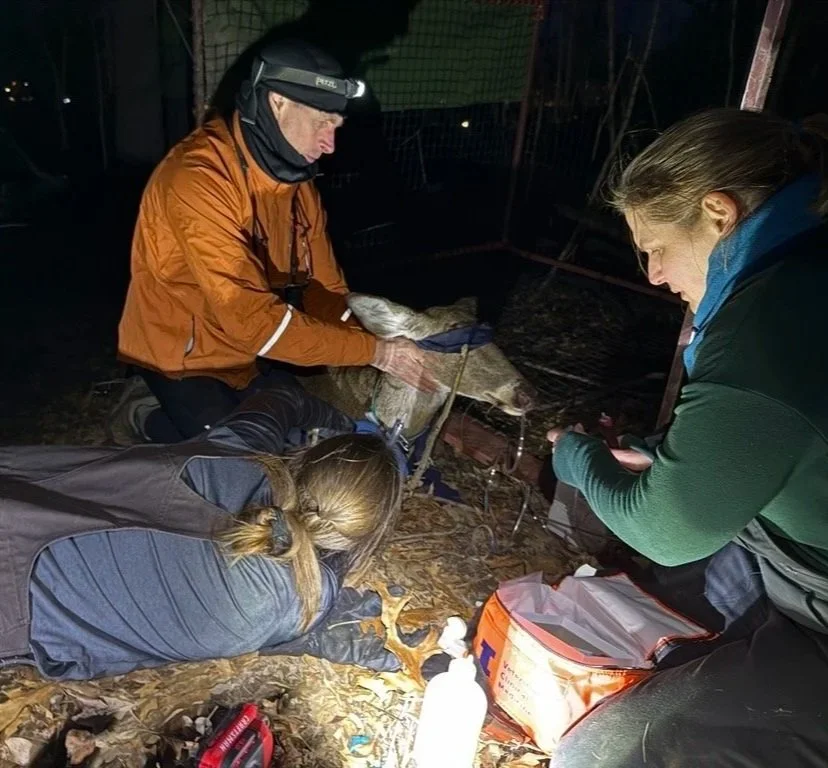
ICM team (Kaitlin and Jamie) collects blood and other samples while Steve (FPLL co-PI) supports an anesthetized Blondie’s head
Blondie acclimated to her new GPS collar quickly and has given us a lot of useful data on her life in this urban landscape. As vegetation thickened throughout the warm season and it was more challenging to observe Blondie in person, we observed her using trail cameras.
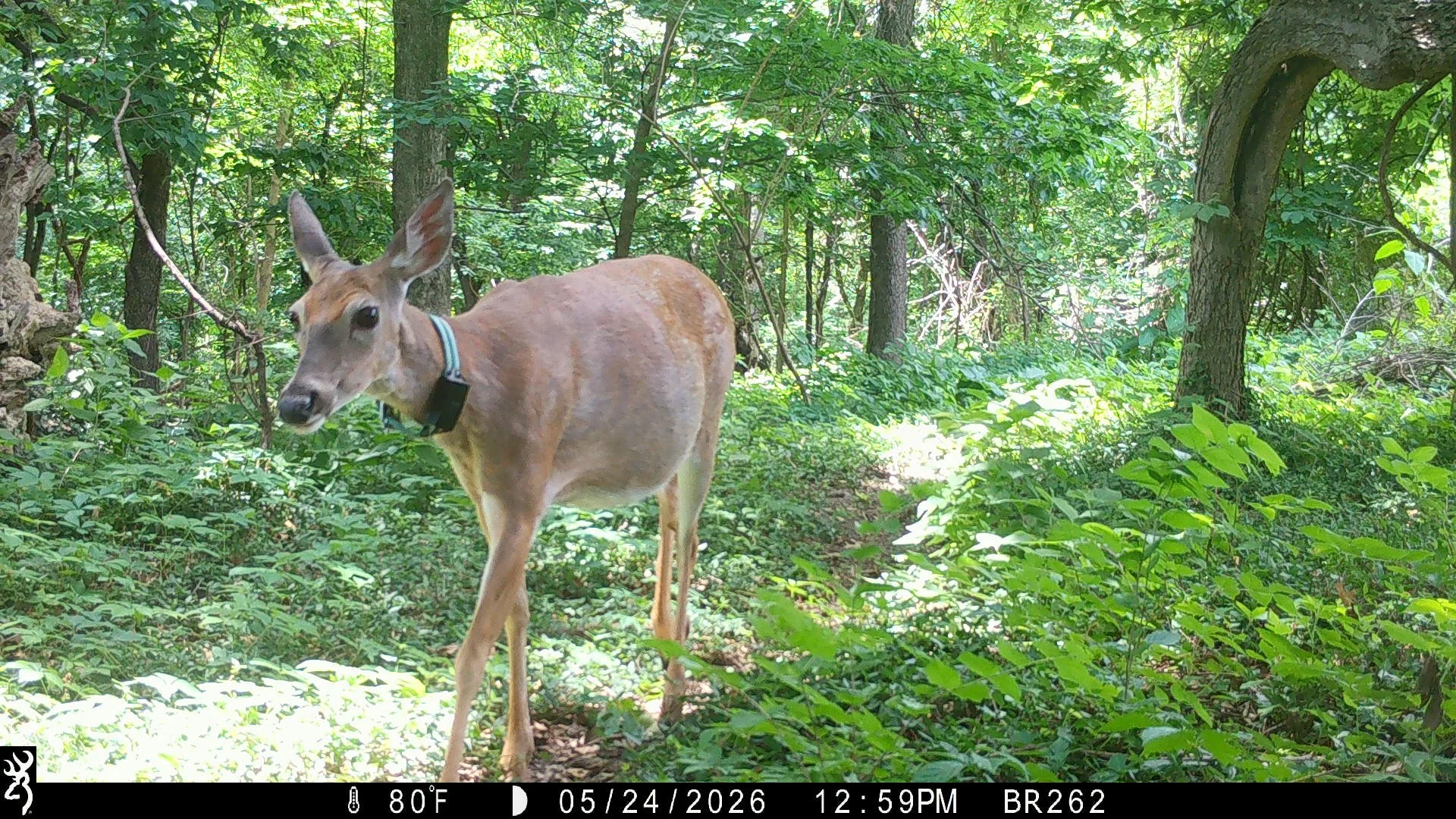
Pregnant Blondie seen on a trail camera near where we captured her
Blondie and, we assume, the other deer in her small group mostly stick in and around Kennedy Forest, but occasionally will venture into downtown Clayton overnight or for about a day (see maps below).
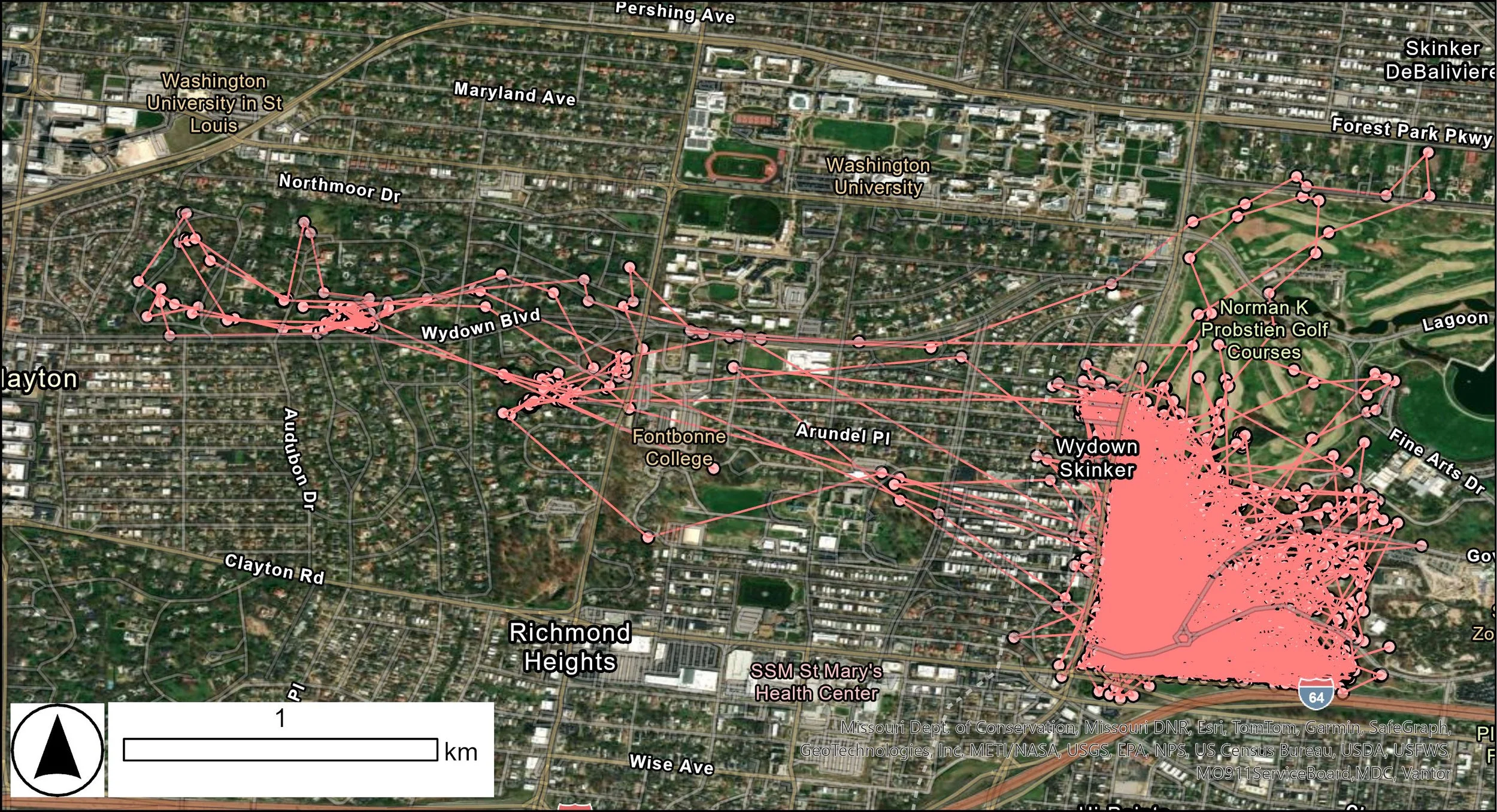
Map of Blondie’s movements, including several trips across Skinker Blvd. to downtown Clayton
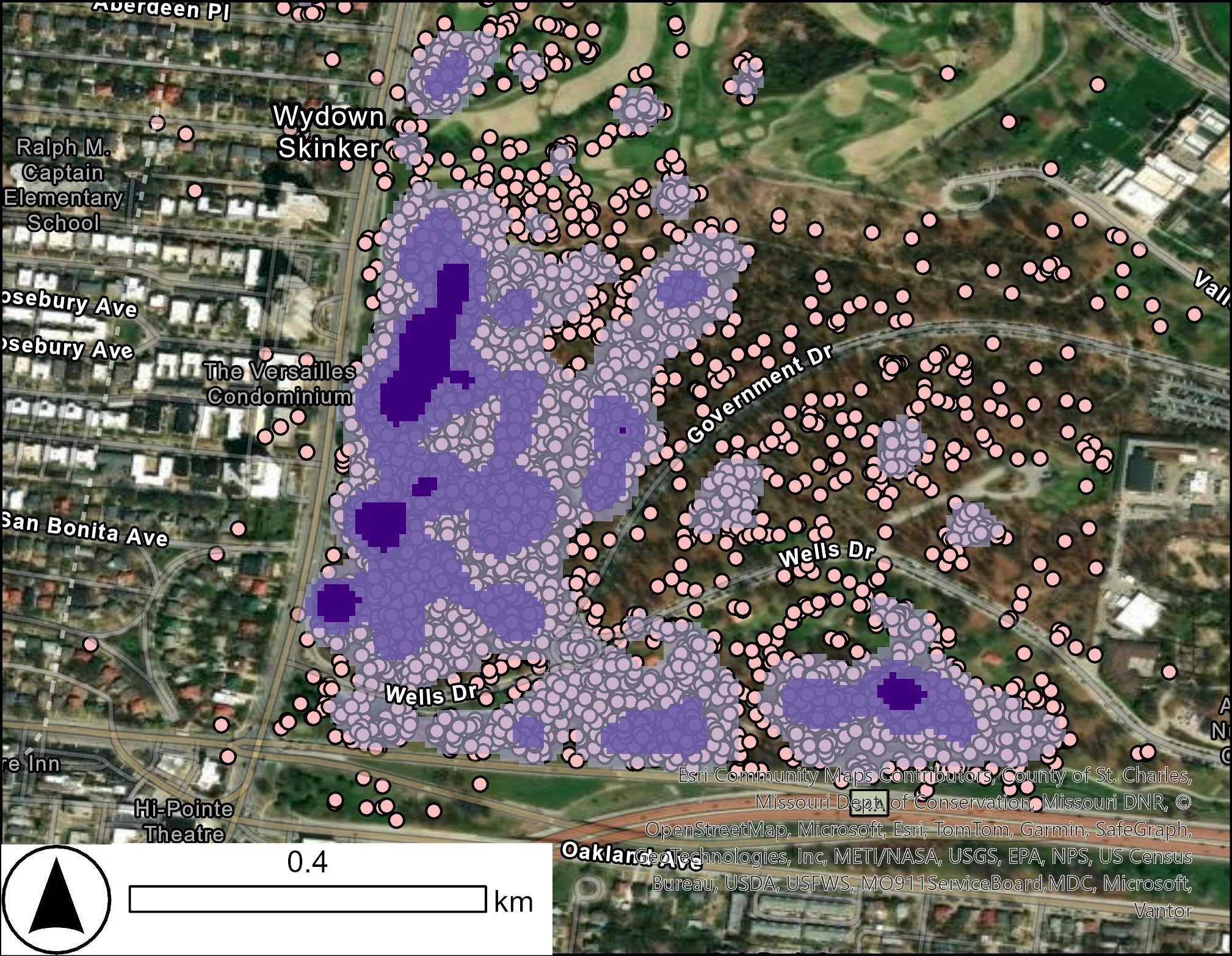
Kernel density map of Blondie’s movements within Forest Park. Darker purple shade indicates areas she visited most frequently
This summer, Blondie gave birth to two fawns! We don’t know their exact birth date, but in Missouri, fawning typically occurs from late May to early June. We do not know their sex, but as they get bigger, they are becoming more visible in Kennedy Forest.
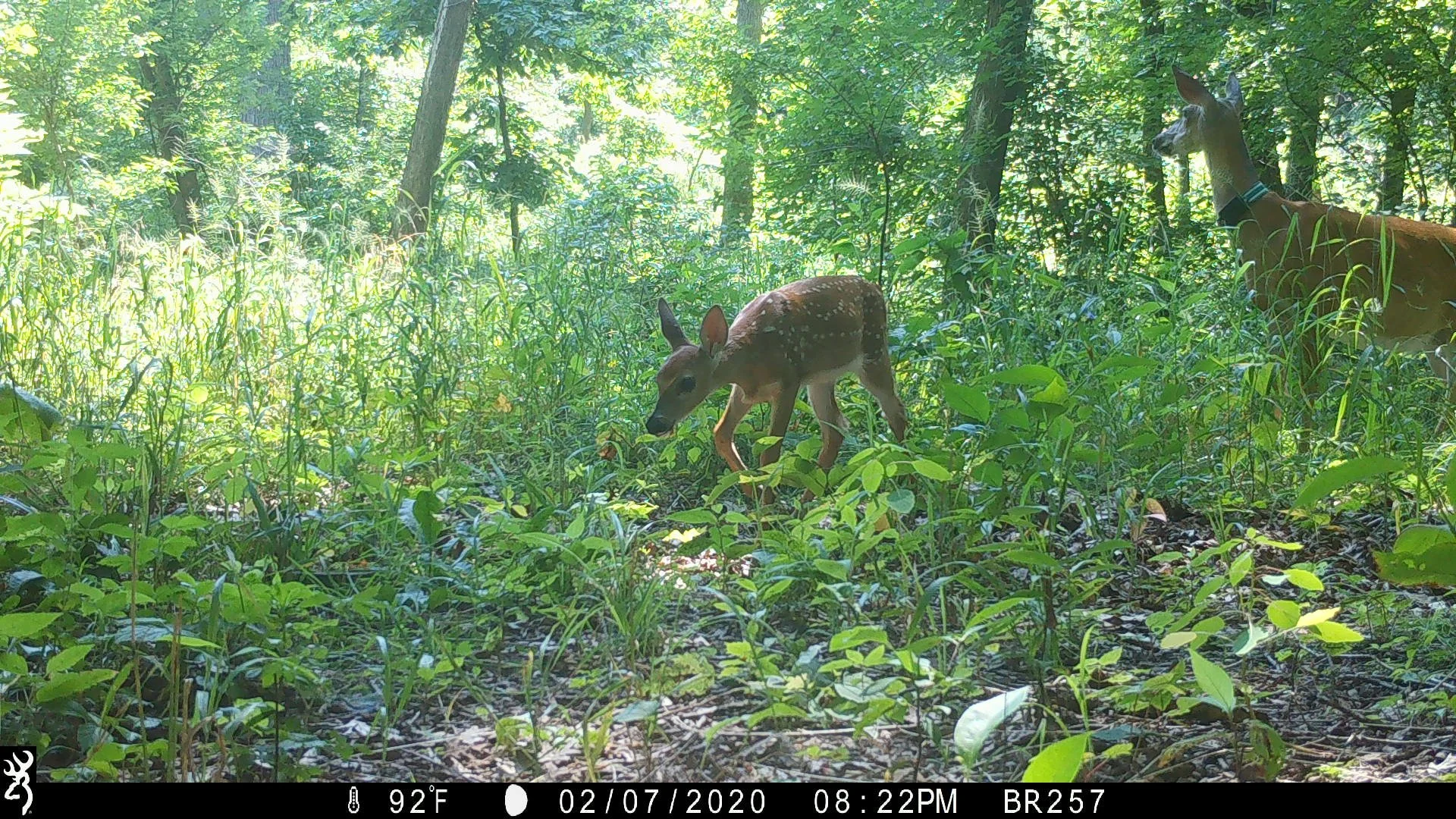
On the trail camera images, we have also often seen a third, older juvenile with Blondie’s fawns, and we suspect this could be her fawn from the previous year (2025 birth).
In early October, our team noticed Blondie had stopped moving, and when we went into the park to check on her, we found she had died. We don’t know exactly what caused her death, but one of the more common causes of death of white-tailed deer in urban areas is vehicular trauma. In fact, another young white-tailed deer was also hit by a car on Skinker Blvd last week. Blondie regularly crossed roads both within Forest Park and surrounding it, so it is possible she was hit by a car and succumbed to internal injuries.
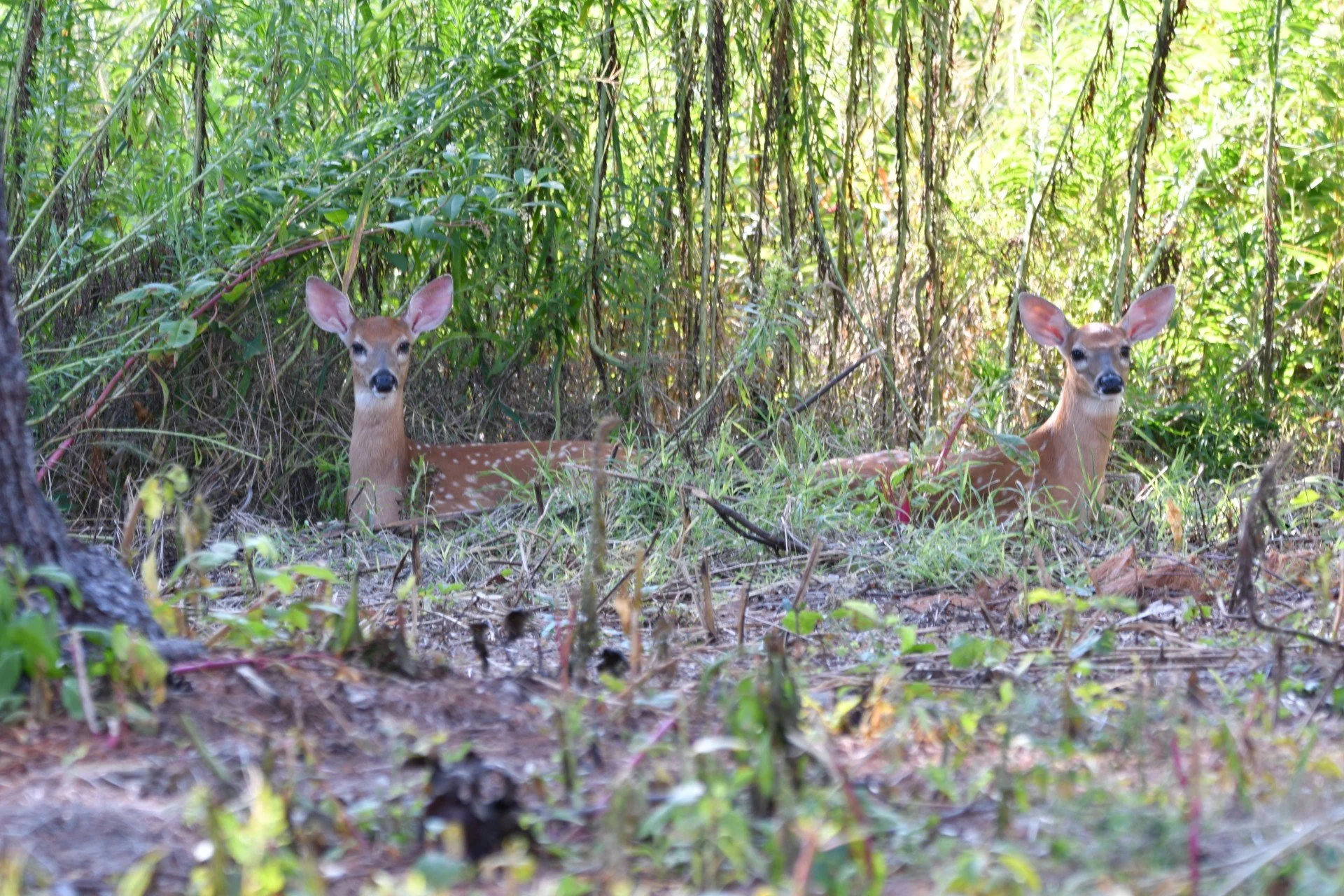
Fortunately, fawns begin foraging around 10 weeks old and are fully weaned by 12-16 weeks. At the time of Blondie’s passing, her fawns were estimated to be between 16 and 18 weeks old and we are hopeful that they will continue to thrive along with their small herd.