Wild Encounters: Teaching Campers Conservation with a Glimpse in the Field
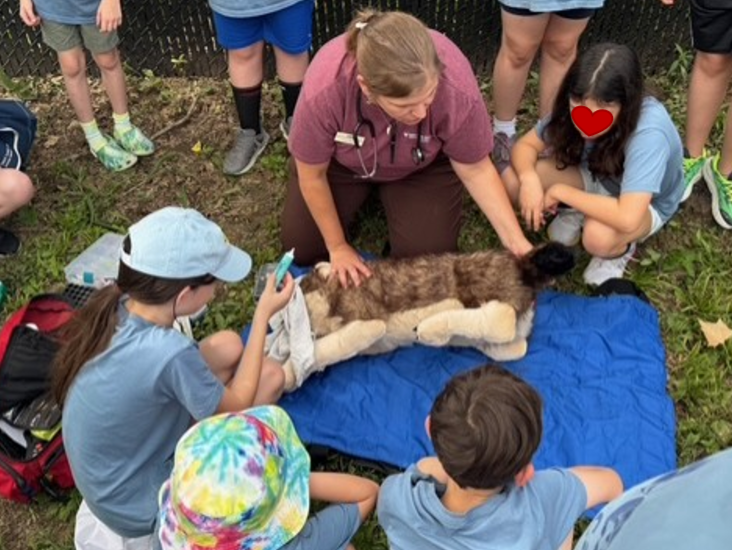
There is something special about watching kids transform from skeptical participants into confident young scientists. This summer, our team joined the Saint Louis Zoo STEAMZ (science, technology, engineering, art, math, and zoo) camp for 16 5th- and 6th-grade students to participate in a coyote health check. Well, kind of. It was a mock coyote health check (learn more about our real coyote work here!) that demonstrated the work done in Forest Park through an interactive, hands-on activity that blended ecology, empathy, and excitement in the best possible way!
Setting the Scene
Before the check-up, our Forest Park Living Lab team members set an actual coyote trap with a plush coyote, lovingly named Charlie, inside. Charlie is an extra-large plush animal from the Zoo’s gift shop. Two interns had placed both weights and a “beating heart” inside Charlie.
Before heading out, though, the campers learned a bit more about coyotes, specifically Solar and Silver, the two coyotes the FPLL team had collared back in 2024. The campers learned how coyotes fit into the ecosystem, the important role they play in the food chain, and the data the FPLL team collected when placing a telemetry collar.
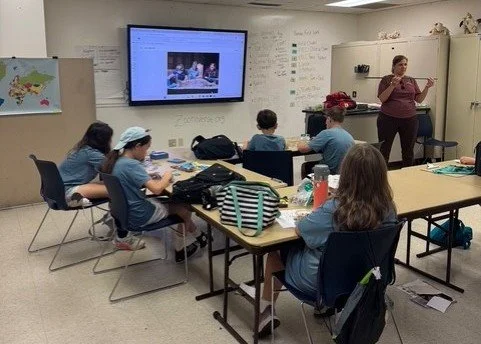
The campers shared their initial thoughts on coyotes, describing them as dangerous, scary, and unwanted in their neighborhoods. We discussed what our scientists do when they study coyotes in the field, including tracking their movements, monitoring their health, and encouraging conversation about human-wildlife coexistence, all of which are essential to the One Health triad. In the classroom, the “camera traps” would send a notification when they detected movement at a set location, and it was time to head out together to learn more!
The Mock Health Check
As we headed out to the trap, our team was really selling the idea that these campers would be helping with the health check if there was a coyote in the trap.
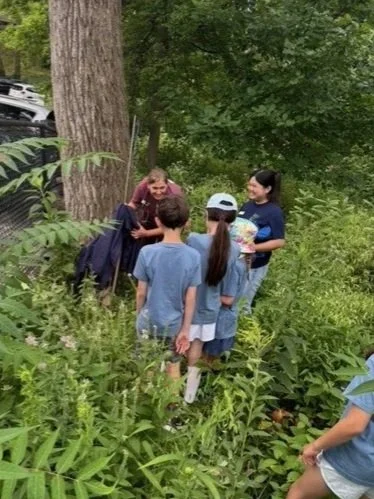
One of the adults would go check the trap while the other stayed back to remind the participants that the animal may be a little nervous so they should keep their voices down. We split the 16 campers into groups of 4, each group helping with different parts of the process. The first group went back to “anaesthetize” Charlie and carried him back to the full group – it was at this point they realized that the coyote wasn’t a living coyote, but they were still just as eager to help! The following groups all worked together to collect health data on Charlie including recording his body weight, heart rate, and temperature. One lucky camper even collected a “blood sample” from the coyote for us to take back to the lab!
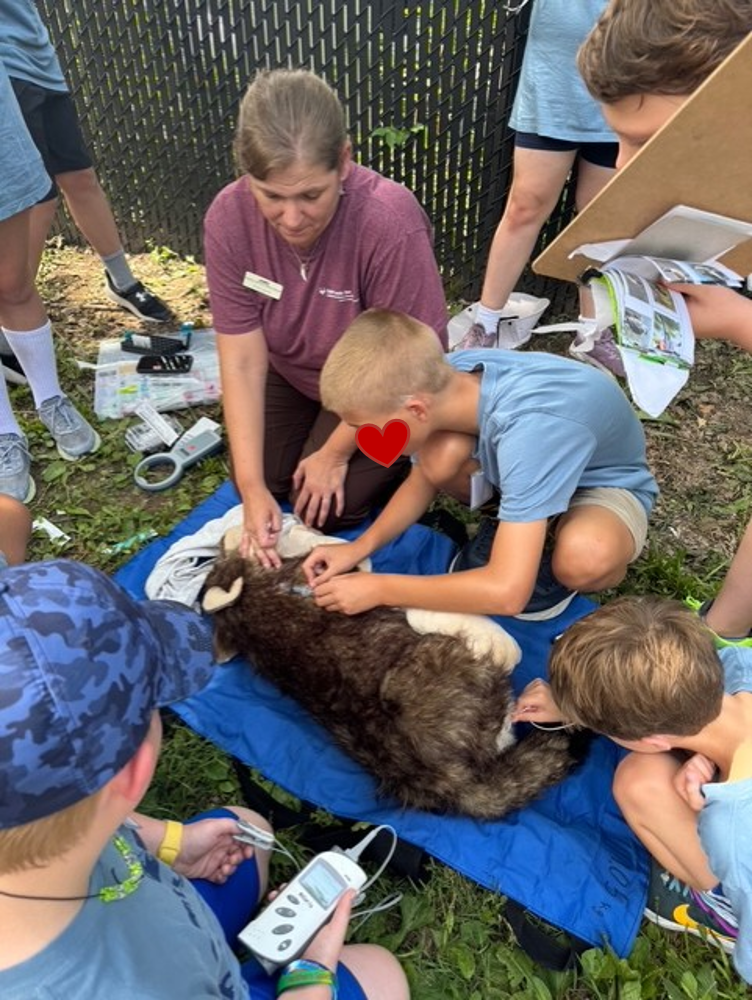
Throughout the process, the students learned how scientists collect and record data in the field with respect to the animals and ecosystem.
Lessons in Conservation and Compassion
This experience was about more than just pretending to be scientists. It allowed students to appreciate their connection to STEAMZ, see themselves in these roles, and understand why this work matters. Through discussion and reflection, campers changed the words they would use to describe coyotes. Instead of being scary and dangerous, they said how they saw them as important and that they mattered – showing an understanding that healthy coyotes mean a healthy environment, even in an urban setting! They learned how human actions can affect animal behavior and well-being, and how we can be better neighbors to our urban wildlife as we promote co-existence.
Reflections from the Field
Campers who participated in this exercise with Charlie the coyote described it as one of their favorite experiences of the whole camp week! It wasn’t just fun and impactful for the campers, though; camp counselors were also convinced they’d be seeing a live coyote, too. Lots of lessons learned and laughs had, with the greater message that curiosity and compassion go hand in hand. Whether it's at camp during a mock animal health check-up or at home watching wildlife in their own backyards, the students appreciated how every moment can be an opportunity to connect with nature and understand our place in it.
By: Grace Warshaw, Conservation Education Liaison, and FPLL team members