Connecting Great Horned Owl (Bubo virginianus) Space Use and Diet in an Urban Park
Published in Urban Naturalist
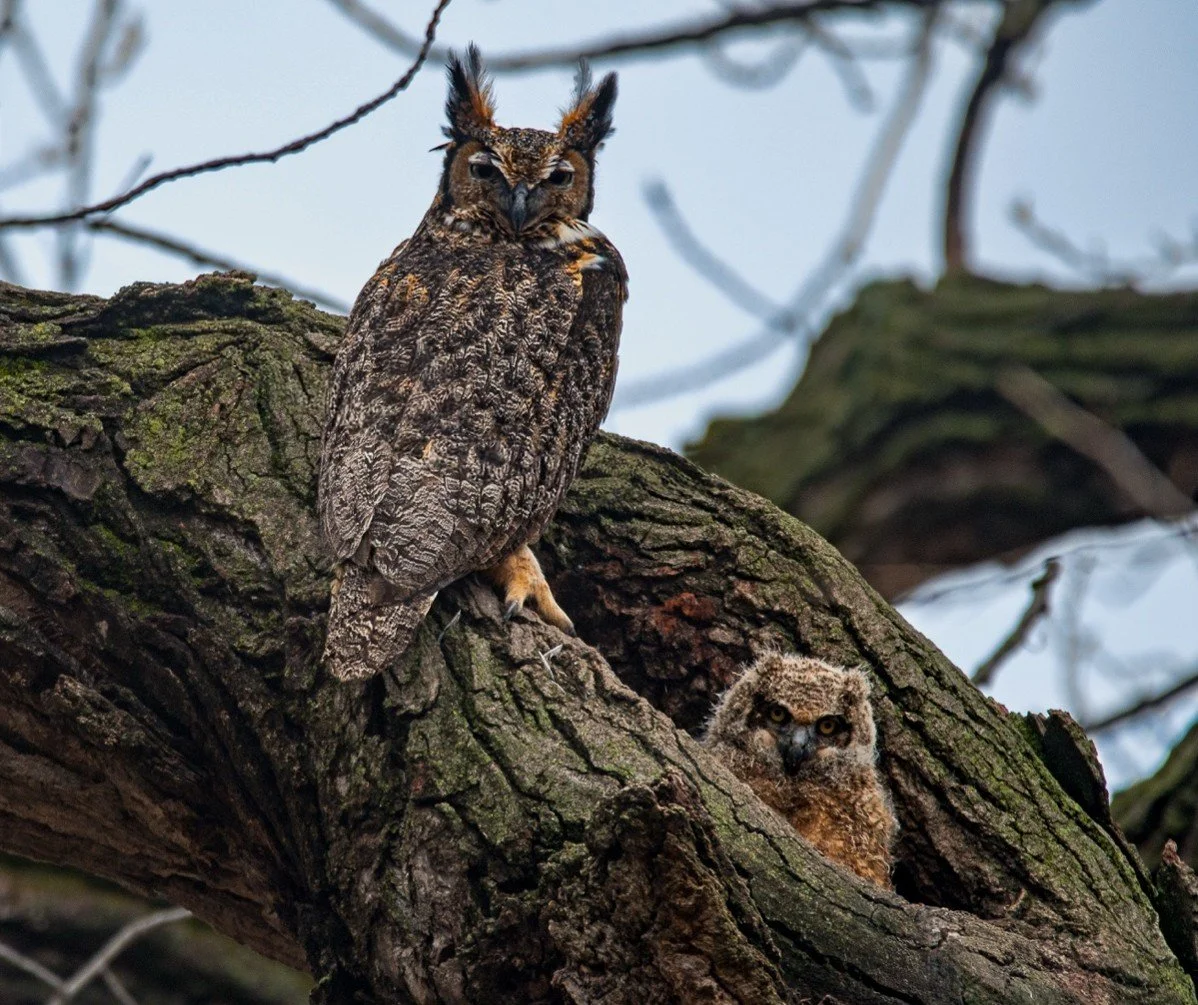
Abstract: With increasing urbanization, many raptor species have readily adjusted to living in urban areas. However, raptors continue to face significant anthropogenic threats that result in high rates of morbidity and mortality. Great Horned Owls (Bubo virginianus) occur in cities across the United States, yet few studies have documented their ecology in urban areas. Here, we investigated the health, diet, movement, and activity of one female Great Horned Owl in Forest Park, Saint Louis, Missouri, one of the largest urban parks in the United States. We used GPS and accelerometry data combined with pellet analysis to examine how this owl used an oasis of green space within a densely developed urban landscape. We describe patterns in space use, demonstrating widespread use of developed areas both inside and outside of the park, and show increased use of areas outside of park boundaries in months with higher space use. We compare dietary data with those of other urban and rural Great Horned Owls, show seasonal variation in diet, and identify correlations between movement, diet, and temperature, suggesting variable energetic demands and intake throughout the annual cycle. Lastly, we provide detailed health information on this healthy and reproductively active female owl to complement our current understanding of baseline health values for Great Horned Owls in urban settings. These findings offer a uniquely detailed insight into how one Great Horned Owl exploited an urban landscape, providing novel data on the ecological trade-offs that may confront urban raptors to help inform planning for raptor conservation in urban green spaces.